
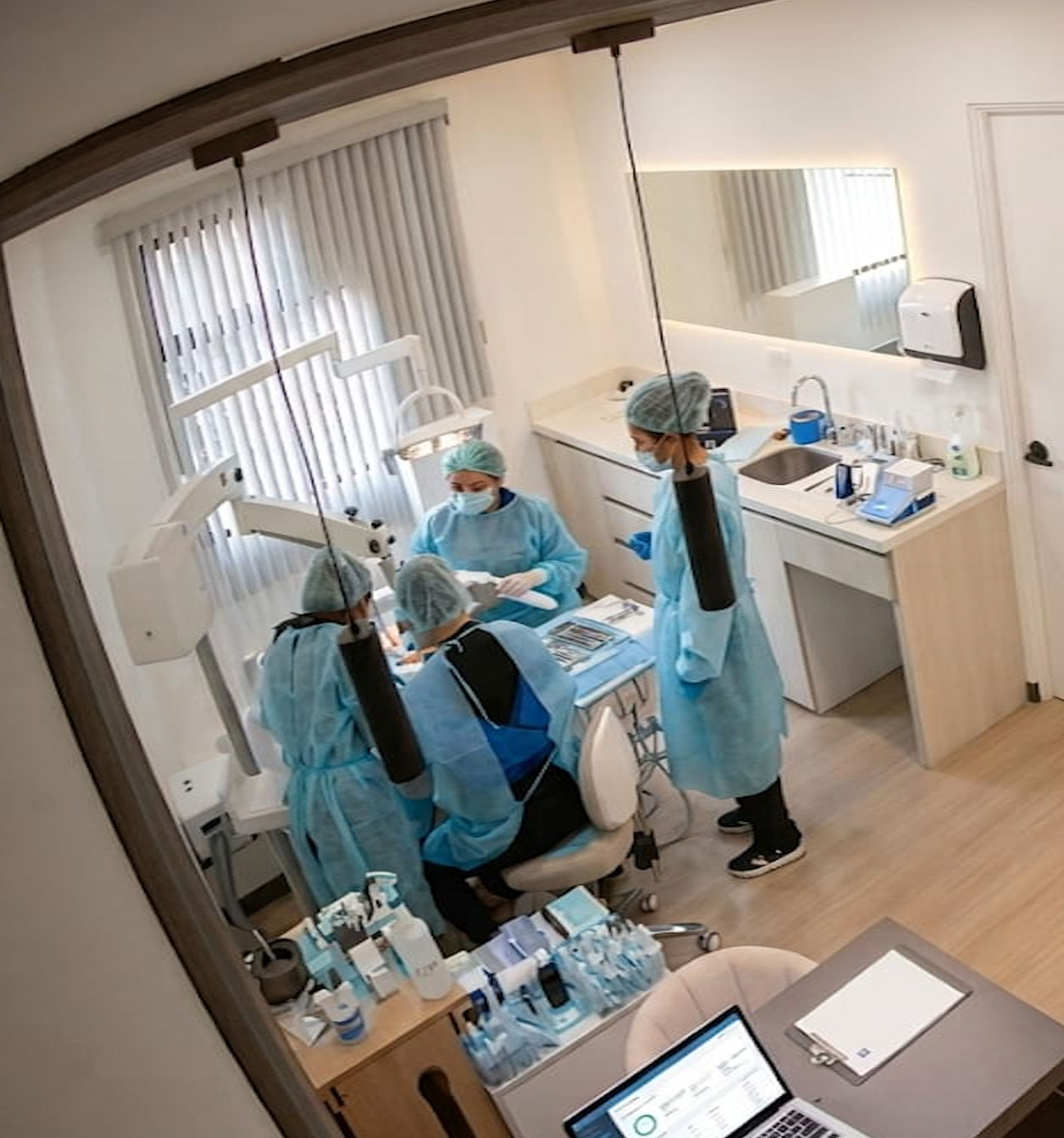
When a tooth problem runs deep, solving it takes more than one specialist—and I’ve built my practice around that reality. Here in Costa Rica, my team and I handle endodontic diagnosis, periodontal preparation, and oral rehabilitation as connected stages of a single plan, not separate appointments scattered across different clinics. In this post, I want to explain how our coordinated approach works, why I perform every root canal under an operating microscope, and what makes this model the best coordinated specialist care in Costa Rica. By the end, you’ll understand how we build complete, lasting dental health one careful step at a time.
Key takeaways
- Complex dental problems need a team. My practice combines endodontics, periodontics, and oral rehabilitation under one clinical direction, so every stage connects seamlessly.
- Microscope-assisted root canals are more accurate. Operating microscopes provide 4x–25x magnification and have been linked to endodontic success rates as high as 93.5%, compared to 59% for traditional methods without magnification (Setzer et al., Journal of Endodontics).
- Gum health comes first. Periodontal tissue preparation creates the stable foundation that crowns, bridges, and implants need to last.
- One clinical direction prevents fragmented care. A coordinated plan means fewer surprises, smoother transitions between specialists, and more predictable outcomes.
- Costa Rica offers world-class coordinated care. My patients benefit from expert specialists, advanced technology, and a complete treatment plan in one location.
Why do complex dental problems need a multidisciplinary team?
In my experience, complex dental cases cannot be solved by a single procedure. A patient with an infected tooth, receding gums, and missing teeth simply cannot be treated properly with isolated fixes—each issue affects the others.
Consider a scenario I see regularly: a tooth needs a root canal, but the surrounding gum tissue is inflamed, and two neighboring teeth are already gone. Treating only the root canal ignores the bigger picture. The infection may return if the gum disease isn’t addressed, and the new crown won’t function well if the bite isn’t restored.
That’s why, at my practice, endodontists, periodontists, and rehabilitation specialists sit down together from the very first consultation. We map out the full treatment path before any work begins. This team-based approach treats the mouth as a connected system, and that is the foundation of the complete care I’m committed to providing.
How does endodontic diagnosis form the foundation of treatment?
For me, endodontic diagnosis is always the starting point, because the health of a tooth’s inner pulp and root determines whether that tooth can be saved at all. Before we rebuild anything, my team confirms which teeth are healthy enough to keep.
What makes root canal problems hard to detect?
In my clinical work, I’ve seen many cases where the damage hides deep inside the tooth, well below the surface and out of plain sight. A tooth can look perfectly fine while harboring infection within its canals. Pain isn’t always present, either—some of the most serious cases I treat cause no symptoms until quite late.
Accurate diagnosis means careful clinical examination and precise imaging. Radiographs reveal hidden infection, bone loss, and the true shape of a tooth’s root canal system. Many teeth contain extra canals that are easy to miss, and in my experience, missing even one can cause an otherwise well-executed treatment to fail.
Why do I perform root canals under an operating microscope?
I perform every root canal under an operating microscope because magnification dramatically improves accuracy—and I believe my patients deserve nothing less. The operating microscope is one of the most important advances in modern endodontics, and the evidence is clear.
Here’s what the research shows about the difference magnification makes:
Treatment method | Magnification used | Cumulative success rate |
|---|---|---|
Traditional surgery | None | 59.0% |
Contemporary surgery | Loupes (2.5x–6x) | 88.1% |
Endodontic microsurgery | Microscope (high-power) | 93.5% |
Source: Setzer et al., meta-analyses published in the Journal of Endodontics.
The operating microscope I use provides adjustable magnification from roughly 4x to 25x, far beyond what standard loupes offer. That extra clarity helps me find narrow or hidden canals that would otherwise go untreated. In one study, dentists located the elusive second mesiobuccal canal in upper molars 90% of the time with a microscope, versus just 52% without aided vision (American Association of Endodontists).
The benefits I see with microscope-assisted root canals include:
- Enhanced visualization. The bright LED light mounted on the microscope reveals subtle changes in dentin color and texture that guide me to every canal.
- Greater precision. I can access tiny canal openings without removing unnecessary tooth structure, preserving more of the natural tooth for my patient.
- Minimized discomfort. Working with this level of precision reduces unnecessary drilling and helps the procedure go smoothly.
- Better long-term results. Finding and cleaning every part of the root canal system improves the odds of a lasting outcome.
A study by Monea and colleagues found that microscope-assisted root canals achieved a 95.9% success rate at 18 months, compared to 91.9% for treatments done without one. When a tooth becomes the anchor for future rehabilitation work, that margin matters enormously to me.
Why is periodontal tissue preparation so important?
I always tell my patients: healthy gums and bone are the foundation that every restoration sits on. A beautiful crown or a well-placed implant will fail if the tissue around it is diseased or unstable. This is not a step we skip.
How does gum health affect the rest of your treatment?
Periodontal disease quietly undermines everything built on top of it. Inflamed, infected gum tissue leads to bone loss, loose teeth, and failed restorations—outcomes I work hard to prevent for every patient who comes through my door.
The connection runs deeper than the mouth, too. Research has linked periodontal disease to wider health concerns, including blood sugar control (Penn Dental Medicine). When I treat the gums, I’m not making a cosmetic improvement—I’m protecting both the dental work and the patient’s overall health.
How are periodontal stages connected to endodontics and rehabilitation?
All three specialties depend on one another for success—this is something I’m reminded of with every complex case. An endodontically treated tooth can still be lost to gum disease. A new bridge needs firm, healthy tissue to rest against.
That’s why my team treats periodontal preparation as a planned stage rather than an afterthought. We stabilize the gums and bone first, creating the groundwork that root canals and rehabilitation need to last. Skipping this step is one of the most common reasons restorations fail in practices that don’t take a coordinated approach.
What does comprehensive oral rehabilitation involve?
Once the underlying problems are resolved, oral rehabilitation is where we restore both the function and the appearance of the mouth. This is the stage I find most rewarding—it’s where patients regain the ability to bite, chew, and smile with real confidence.
Depending on a patient’s needs, oral rehabilitation in my practice can include:
- Crowns and bridges to rebuild damaged or missing teeth.
- Dental implants to replace lost teeth with a stable, natural-feeling result.
- Restorative dentistry to repair worn or broken teeth and correct the bite.
The goal goes beyond appearance. A properly rehabilitated mouth distributes biting forces evenly, protects the remaining teeth, and supports long-term oral health. Because my team plans this final stage from the very beginning, each restoration fits into a coherent whole rather than standing alone.
Why does treatment under one clinical direction matter?
One of the things I’m most proud of is that my patients don’t have to coordinate their own care between disconnected providers. A single guiding plan keeps every specialist on my team working toward the same outcome—yours.
When care is fragmented, problems slip through the cracks. One provider may not know what another has done, treatment stages can conflict, and patients are left navigating it all on their own. Under one clinical direction, those risks disappear entirely.
The advantages of our unified approach include:
- Seamless transitions between endodontic, periodontal, and rehabilitation stages.
- Better collaboration, since my specialists share records, imaging, and a single treatment vision.
- Personalized plans built around each patient’s specific situation.
- Predictable outcomes, because every stage is designed to support the next.
For you as a patient, this means more comfort, fewer appointments spent re-explaining your history, and the confidence of knowing your team already has the full picture.
What makes my team the best coordinated specialist care in Costa Rica?
My team stands out because we bring expert endodontists, periodontists, and rehabilitation specialists together under one roof and one clinical direction. You don’t have to assemble your own team or travel between clinics—we handle that for you.
We pair that expertise with advanced technology, including the operating microscope I use for every root canal. This combination of skilled specialists and modern tools is what separates our coordinated model from the fragmented alternative. Every stage—diagnosis, gum preparation, and rehabilitation—is planned together from the start, so nothing is left to chance.
Above all, my practice is built on a commitment to complete, lasting dental health. My goal isn’t a quick fix. It’s a result that holds up for years.
Your path to a healthier smile
Complex dental problems rarely have simple answers, but they do have a clear path forward. By combining endodontic diagnosis, periodontal preparation, and oral rehabilitation into one coordinated plan, my team and I deliver care that is accurate, connected, and built to last. Microscope-assisted root canals, healthy-gum foundations, and thoughtfully planned restorations all work together toward one goal: a healthy, functional, confident smile.
If you’re facing a complicated dental situation, you don’t have to figure it out alone. Reach out to my practice and let’s talk about how coordinated specialist care can restore your smile—completely.
Frequently asked questions
What is a multidisciplinary dental team?
A multidisciplinary dental team is a group of dental specialists—such as endodontists, periodontists, and rehabilitation experts—who work together on a single coordinated treatment plan. At my practice, this team operates under one clinical direction, so each stage of care connects smoothly to the next.
Is a root canal under a microscope better than a standard root canal?
Yes. Root canals performed under an operating microscope are more accurate because the magnification helps me find and clean every canal. Research links microscope-assisted endodontics to success rates as high as 93.5%, compared to 59% for traditional methods without magnification (Setzer et al., Journal of Endodontics).
Why do I need periodontal treatment before getting crowns or implants?
You need periodontal treatment first because crowns, bridges, and implants require healthy gums and bone to last. Treating gum disease before rehabilitation creates a stable foundation and significantly lowers the risk of restoration failure—something I prioritize for every patient.
How long does complete dental rehabilitation take?
The timeline depends on the complexity of your case and the number of stages involved. Because my team plans all stages from the start under one clinical direction, treatment moves more efficiently than fragmented care spread across separate providers. A personal consultation is the best way to get an accurate estimate.
Why choose a dental practice in Costa Rica for complex care?
Costa Rica offers access to skilled specialists, advanced technology, and coordinated treatment in a single location. My multidisciplinary team provides what I believe is the best coordinated specialist care in Costa Rica—combining precise diagnosis, microscope-assisted endodontics, and complete oral rehabilitation under one roof.


