
A guide from a DensCare endodontist, Avenida Médica, Escazú (next to Hospital CIMA)
When a tooth hurts, gets infected, or fractures, almost every patient at our clinic on Avenida Médica, Escazú asks the same first question: “Are you going to pull it?” It’s an understandable reaction, since for years extraction followed by an implant was marketed as the “modern,” definitive solution. But the clinical evidence, and the experience of endodontists, says otherwise: whenever a natural tooth can be saved, it should always be saved first. The implant isn’t going anywhere — it doesn’t expire, and it will still be a valid option later if it’s truly needed. That’s why at DensCare we work from a simple principle: we first evaluate whether the tooth has a solution, and only when it doesn’t do we talk about artificial replacement.
This article explains, based on the available evidence, why this order matters so much for your oral health and your wallet, and when it actually is time to consider an implant.
Why does an endodontist always try to save the tooth before thinking about extracting it?
Because no artificial material fully reproduces what a natural tooth does. The American Association of Endodontists (AAE) sums it up in a phrase we use with patients every day: nothing looks, feels, or functions like your own tooth. The periodontal ligament surrounding the natural root transmits the sensation of pressure when you bite, something no osseointegrated implant can replicate, because the implant fuses directly to the bone without that biological “shock absorber.”
When a tooth still has its root and supporting bone, root canal treatment (endodontics) removes the infection from inside the tooth and leaves it fully functional, usually in one or two visits. It’s a conservative procedure: the bone isn’t touched, no surgery is required, and recovery is typically limited to mild sensitivity for a few days.
Root canal treatment vs. extraction and an implant: the real comparison
Before deciding, it’s worth laying both paths side by side, because the differences aren’t just about comfort — they’re about time, cost, and biology:
- Treatment time: root canal treatment is completed in 1–2 visits; extraction plus bone grafting (when needed), implant placement, and osseointegration can take 4 to 9 months.
- Invasiveness: root canal treatment doesn’t require bone surgery; an implant does, since a titanium screw is inserted directly into the jawbone.
- Cost: saving the tooth almost always represents a lower upfront investment than the full sequence of extraction plus implant and crown.
- Bone structure: preserving the natural root keeps the bone stimulated through daily chewing; losing the tooth starts a bone resorption process that, over time, can even complicate a future implant placement.
- Longevity: with proper care, most teeth treated with root canal therapy can last decades. Implants can also be very durable, but their components (screw, abutment, crown) may need maintenance or replacement over the years.
What often goes unsaid about implants
A well-planned implant is an excellent solution when it’s truly needed, and at DensCare we offer it with full confidence in those cases. But presenting it as risk-free wouldn’t be honest with our patients. Dental literature describes peri-implantitis — inflammation and infection of the tissue and bone around an implant, similar to periodontal disease — as one of the most
frequent long-term complications. Reviews published in scientific journals report peri-implant mucositis (the initial, reversible stage) in up to 50% of implants evaluated, and outright peri-implantitis in around 28% of patients with long-term implants, making it the leading cause of failure in series following more than a thousand implants over time.
This doesn’t mean implants are a bad option. It means that, like any surgical procedure, they carry lifelong maintenance and a risk that simply doesn’t exist when the original tooth can be preserved. Extracting a tooth that could still have been saved is a decision that can’t be undone.
The benefits of keeping your natural tooth go beyond "not losing it"
Keeping your original tooth isn’t just a sentimental matter. It has measurable consequences for your oral health:
- Preserves your natural bite and keeps neighboring teeth from shifting into the empty space, a very common problem after an extraction without immediate replacement.
- Maintains proprioception — the ability to sense, with precision, the force and position of your bite, essential for not accidentally biting down too hard or damaging a restoration.
- Preserves the look of your smile without relying on an implant crown that, over the years, can start to look different from the rest of your natural teeth.
- Avoids additional procedures, such as bone or gum grafts, which often become necessary once time has passed since an extraction and the bone has already resorbed.
- Reduces overall post-operative discomfort: multiple clinical sources agree that recovery from an extraction tends to be more uncomfortable than from a well-performed root canal treatment.
So when is it actually time to consider an implant?
An implant stops being “the last resort” and becomes the right choice once the tooth no longer has a biological foundation worth saving. That happens, for example, with a vertical root fracture, severe bone loss around the tooth, advanced root resorption, or when the tooth was already extracted some time ago and there’s nothing left to treat. In those scenarios, an implant is an excellent, predictable solution, and at DensCare we support our patients through that entire process with the same clinical rigor.
The difference lies in the order of decisions: the options for preserving the natural tooth are exhausted first, guided by a precise endodontic diagnosis (X-rays, vitality tests, sometimes 3D imaging), and only if that diagnosis confirms there’s no viability does treatment move toward replacement. The implant, when it’s truly needed, is still there, waiting. The natural tooth, on the other hand, doesn’t come back once it’s extracted.
Common myths about root canal treatment that delay the right decision
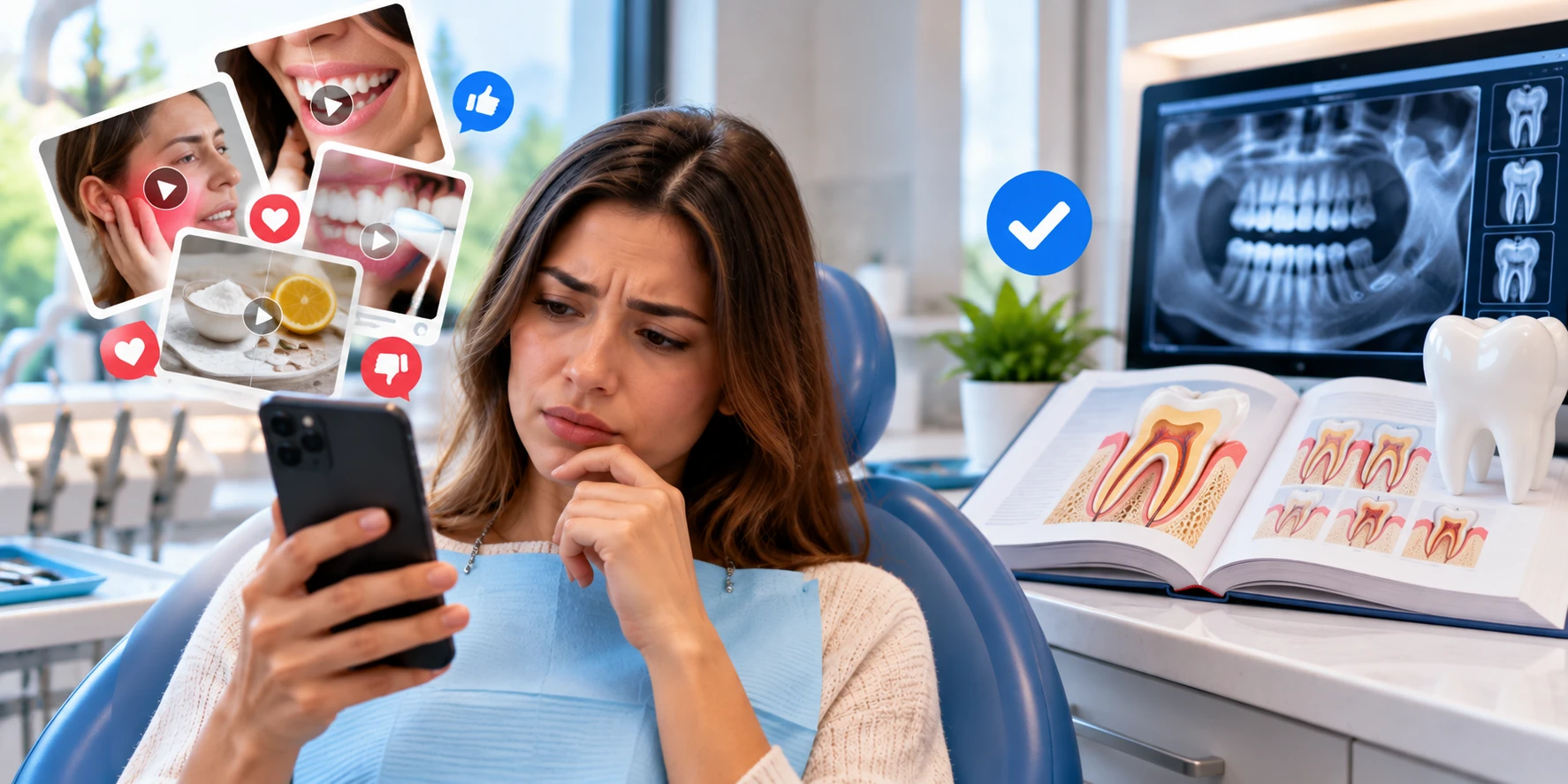
Many patients put off their appointment because of beliefs that no longer reflect modern endodontics. “It hurts a lot” is probably the most widespread myth, when in reality the procedure is performed under local anesthesia and its whole purpose is to eliminate the pain caused by the infection, not to cause it. Another common myth is thinking “it’s better to just pull it out once and be done with it,” without considering that this decision opens the door to months of follow-up treatment to place an implant, along with a higher cost and a more involved surgical process. Clearing up these myths with verifiable information is part of our job as endodontists.
Why seeing a specialist on Avenida Médica, Escazú makes a difference
Not every case of tooth pain is the same, and the decision between saving a tooth or planning a replacement depends on a specialized endodontic diagnosis, not a general checkup. At DensCare, located on Avenida Médica, Escazú, next to Hospital CIMA, we have the specific endodontic training and technology to determine precisely whether your tooth is viable, and to treat it to the highest standards when it is. If you live in Escazú or nearby and have a tooth that’s worrying you, the most important recommendation is simple: get evaluated before you decide. A timely evaluation with a trusted endodontist can be the difference between keeping your tooth for decades or starting a replacement process that, many times, could have been avoided.
Frequently asked questions
Is root canal treatment or a dental implant better?
When the tooth still has a healthy root and supporting bone, root canal treatment is preferable: it’s less invasive, more affordable, faster, and preserves the tooth’s natural function and sensation. An implant is reserved for when the tooth no longer has biological viability.
Does root canal treatment hurt?
No. It’s performed under local anesthesia, and its purpose is to eliminate the pain caused by infection or inflammation of the tooth’s nerve, not to cause it. Any discomfort afterward is usually mild and lasts only a few days.
How long does a tooth treated with root canal therapy last?
With proper care and a good final restoration, most teeth treated with root canal therapy can last decades, according to the American Association of Endodontists.
What happens if I extract a tooth instead of saving it?
The bone that supported that tooth begins to resorb, neighboring teeth can shift into the empty space, and if you later decide to place an implant, additional procedures such as a bone graft may be needed.
Do dental implants carry long-term risks?
Yes. Although they’re an effective solution when needed, dental studies report peri-implantitis — an infection of the tissue around the implant — in a significant percentage of patients with long-term implants, which is why implants require rigorous maintenance and hygiene for life.
When is an implant actually necessary instead of saving the tooth?
When there’s a vertical root fracture, severe bone loss, advanced root resorption, or the tooth was already extracted previously. In those cases, an implant is the best option available.
Where can I get an endodontic evaluation in Escazú?
At DensCare, located at Torre Médica 2, 2nd floor, office 203, Avenida Médica, Escazú, next to Hospital CIMA, we perform a complete endodontic evaluation to determine whether your tooth can be saved before considering any extraction or implant.