
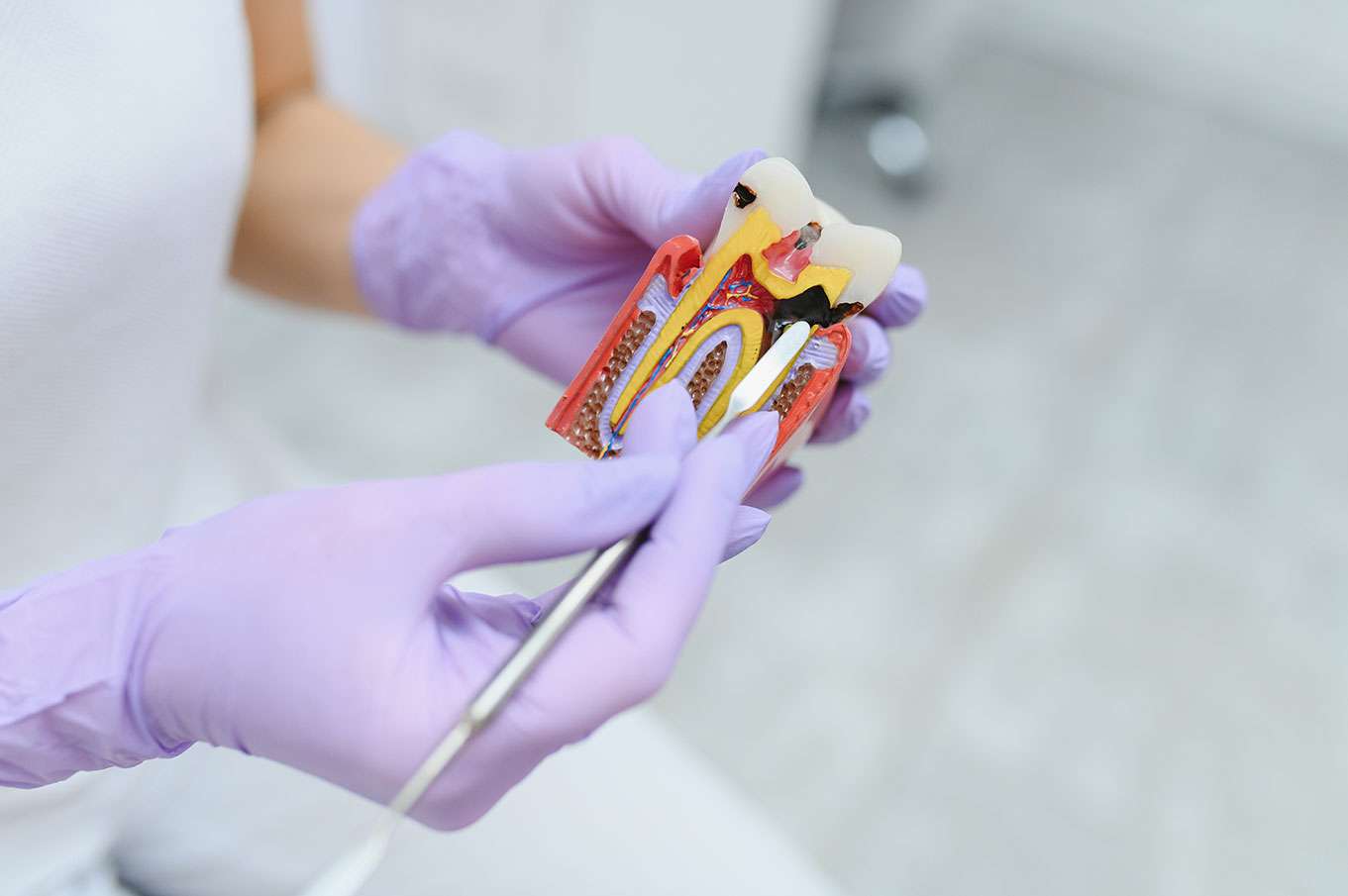
A clear guide to the symptoms that signal nerve damage in a tooth, and the warning signs that a previous root canal treatment isn't working as it should.
A “nerve treatment,” clinically known as root canal treatment or endodontic therapy, is the procedure indicated when the dental pulp — the tissue containing nerves and blood vessels inside the tooth — becomes irreversibly inflamed or infected. Recognizing the symptoms of a damaged nerve early, as well as identifying when a previous treatment isn’t healing properly, allows you to act before the problem compromises the tooth. Below, we explain both scenarios based on the most common clinical signs.
What exactly is root canal treatment?
Root canal treatment involves removing damaged or infected pulp tissue from inside the tooth, thoroughly disinfecting the root canal system, and sealing it hermetically to prevent reinfection. The goal is to eliminate pain, control infection, and preserve the natural tooth instead of extracting it. It is one of the most effective procedures in dentistry for saving severely compromised teeth, and when performed under a surgical operating microscope, precision in locating and disinfecting the canals increases considerably.
Signs you might need a root canal treatment
A tooth’s nerve can be damaged by deep decay, trauma, fractures, or repeated restorations. Here are the most common signs that warrant an evaluation:
Spontaneous or intense pain when chewing
Pain that appears without an obvious cause, and that increases when biting or applying pressure, usually indicates that the dental pulp is inflamed or that there is an infection at the root of the tooth.
Prolonged sensitivity to cold or heat
Brief sensitivity is normal in certain cases, but if the pain lingers for more than 20-30 seconds after the stimulus is removed, it’s a characteristic sign of irreversible pulp damage.
Gum swelling or the appearance of an abscess
Localized swelling, with or without pain, near a tooth’s root can indicate that the infection has already spread beyond the nerve into the surrounding bone.
A change in the tooth’s color
A tooth that gradually darkens, taking on a grayish or yellowish tone compared to neighboring teeth, generally reflects that the internal tissue has lost vitality.
Pain when biting or tapping the tooth
Sensitivity to percussion — that is, when tapping or lightly striking the tooth — usually signals inflammation in the tissues surrounding the root.
Pain referred to the ear, temple, or jaw
In some cases, pain of dental origin is felt in nearby areas of the face or head, which can delay diagnosis if the dental origin isn’t evaluated.
Important: some teeth with pulp damage show no symptoms at all and are detected only through a routine X-ray. The absence of pain does not rule out the need for treatment.
What happens if a tooth that needs treatment isn't treated in time?
When damaged pulp tissue is left untreated, the infection progresses into the bone surrounding the root, forming a periapical lesion. This can lead to intense pain, recurring abscesses, bone loss around the tooth, and, in the most advanced cases, loss of the tooth. In addition, an untreated dental infection can spread to neighboring tissues, which is why timely evaluation with a specialist is key to preserving the tooth and avoiding more serious complications.
Signs your root canal treatment might be failing
A well-performed root canal treatment has a high long-term success rate. However, in some cases the tooth doesn’t heal properly or becomes reinfected months or years later. Here are the signs suggesting a previous treatment might be failing:
Persistent or recurring pain
If pain doesn’t go away weeks after treatment, or if a tooth that was symptom-free starts hurting again months or years later, it’s a warning sign that requires evaluation.
Recurring swelling or drainage (a sinus tract)
The repeated appearance of a small bump on the gum near the treated tooth, which sometimes drains, indicates an active infection that hasn’t been fully controlled.
A lesion that doesn’t heal or grows on X-ray
In follow-up radiographic checks, any periapical lesion is expected to progressively shrink. If the lesion stays the same size or grows over time, it suggests the infection is persisting.
Sensitivity to biting long after treatment
A treated tooth shouldn’t hurt when chewing once the initial recovery phase is complete. Persistent pain when biting months later can indicate a root fracture or residual infection.
Tooth mobility or ongoing color change
Increased mobility of the tooth, or progressive darkening after treatment, can signal bone involvement or bacterial leakage into the canal.
Why can a root canal treatment fail?
The most common causes of failure include additional canals that went undetected due to complex root anatomy, bacterial leakage from a final restoration placed late or done poorly, root fractures not visible on the initial exam, and reinfection of the canal system over time. Using a surgical operating microscope and three-dimensional imaging technology (CBCT) significantly reduces the risk that these factors go unnoticed during the initial treatment.
What to do if you suspect your treatment is failing
Faced with any of these signs, the first step is a clinical and radiographic evaluation with an endodontist, who will determine the exact cause of the failure and the available options. Depending on the case, this may include a root canal retreatment (reopening, cleaning, and resealing the tooth), periapical microsurgery (apicoectomy) when access through the canal isn’t sufficient, or, in cases where the tooth is no longer viable, extraction with evaluation of an implant as a replacement option. A timely diagnosis significantly improves the odds of preserving the natural tooth.
Frequently Asked Questions
How do I know if a toothache is coming from the nerve?
If the pain is spontaneous, intense, worsens when chewing, or lingers several seconds after a cold or hot stimulus, the tooth’s nerve is likely compromised. Only a clinical and radiographic evaluation can confirm the diagnosis.
Can a root canal treatment fail years after it was performed?
Yes. While most treatments succeed long-term, reinfection or a root fracture can appear months or even years later, which is why periodic follow-up checks matter.
How is a failing root canal treatment detected?
It’s detected through clinical evaluation of symptoms (pain, swelling, a sinus tract) combined with X-rays or, in complex cases, cone-beam computed tomography (CBCT), which allows a more detailed view of the bone around the root.
Does a tooth with a failed root canal always need to be extracted?
Not necessarily. In many cases, a retreatment or periapical microsurgery can preserve the tooth. Extraction is considered only when these options aren’t viable or the tooth has a root fracture.
How long after treatment should I wait for the pain to go away?
Mild sensitivity for a few days after the procedure is normal. If pain is intense, increases over time, or lasts more than one to two weeks, a follow-up evaluation is recommended.