1. Why there is no single price
“How much is a root canal?” is probably the question we receive most often, and it is a fair one. The honest answer, however, is: it depends on the tooth. An incisor with a single straight canal and a molar with four curved, calcified canals are very different treatments in time, instruments and difficulty, even though both share the same name.
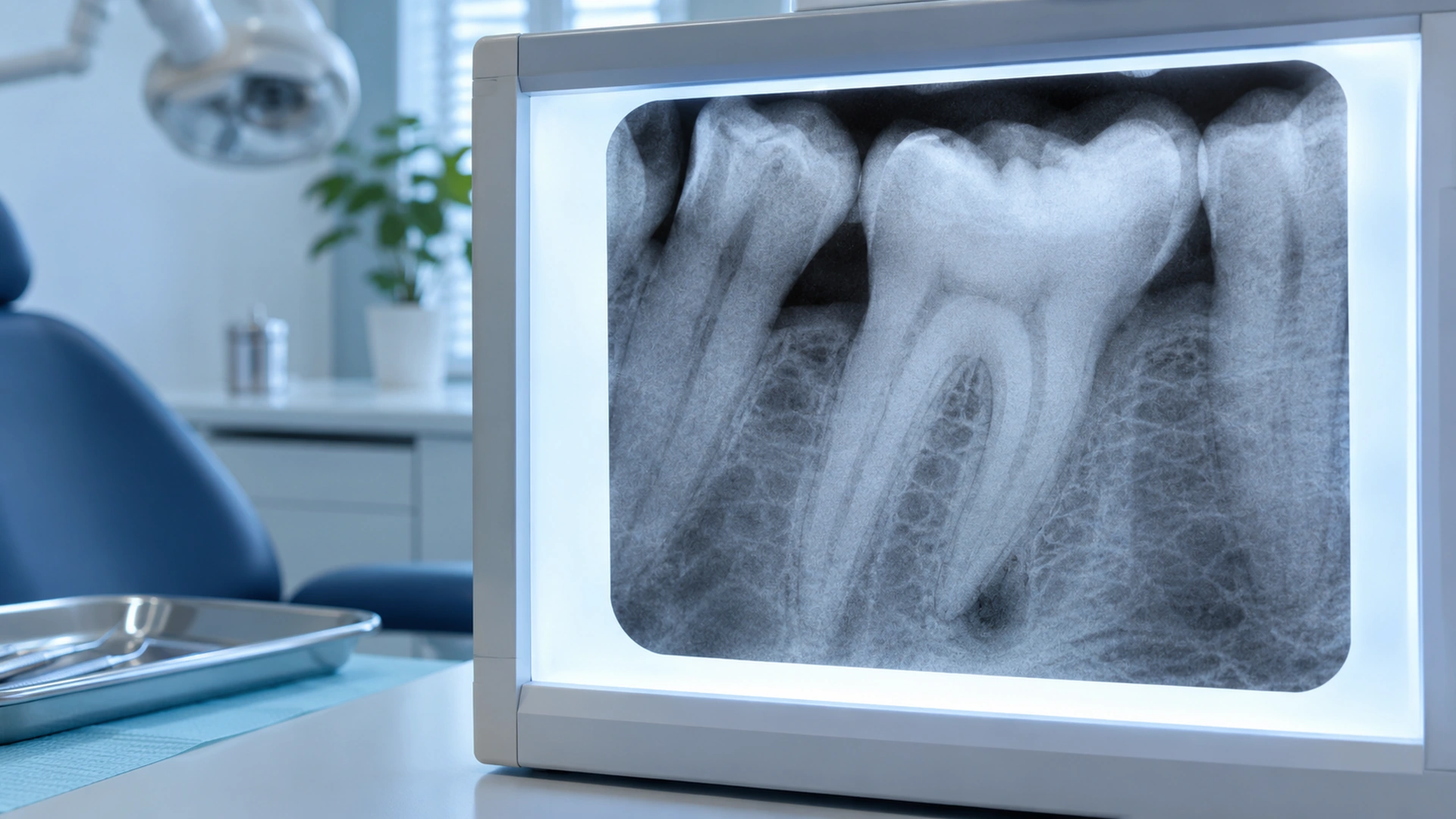
Quoting a price without seeing an X-ray means guessing. If the number is low, the patient may be surprised when an extra canal or an unexpected lesion appears; if it is high, the patient is alarmed for no reason. So instead of a figure, this article explains what determines the cost, so you can compare quotes with confidence and know exactly what you are paying for.
It also helps to understand what you are actually paying for. A root canal is not just time in the chair: it is the precision to find and clean every canal, the complete disinfection of the root system and a seal that prevents reinfection. When any of those steps is done incompletely, the initial savings are usually lost later on.
2. What determines the cost
| Factor | How it affects cost | Example |
|---|---|---|
| Type of tooth | More canals mean more time and more instruments. | An incisor usually has one canal; a premolar one or two; a molar three or more. |
| First treatment or retreatment | Redoing a root canal means removing the old filling, sometimes posts or broken instruments. | A retreatment is almost always more complex and costly than the initial treatment. |
| Anatomical complexity | Curved, narrow or calcified canals demand more precision and time. | Older patients or teeth with deep, long-standing restorations. |
| Imaging | Digital X-rays are standard; 3D imaging is indicated only for complex cases. | Suspected fracture, resorption or unusual anatomy. |
| Number of visits | An active infection may require medication between visits. | An abscess or a large lesion around the root. |
| Final restoration | The treated tooth needs a definitive restoration to protect it. | Composite, onlay or crown, sometimes with a post. |
| Emergency care | Treating acute pain outside the schedule requires immediate availability. | A first visit to relieve pain, then completion later. |
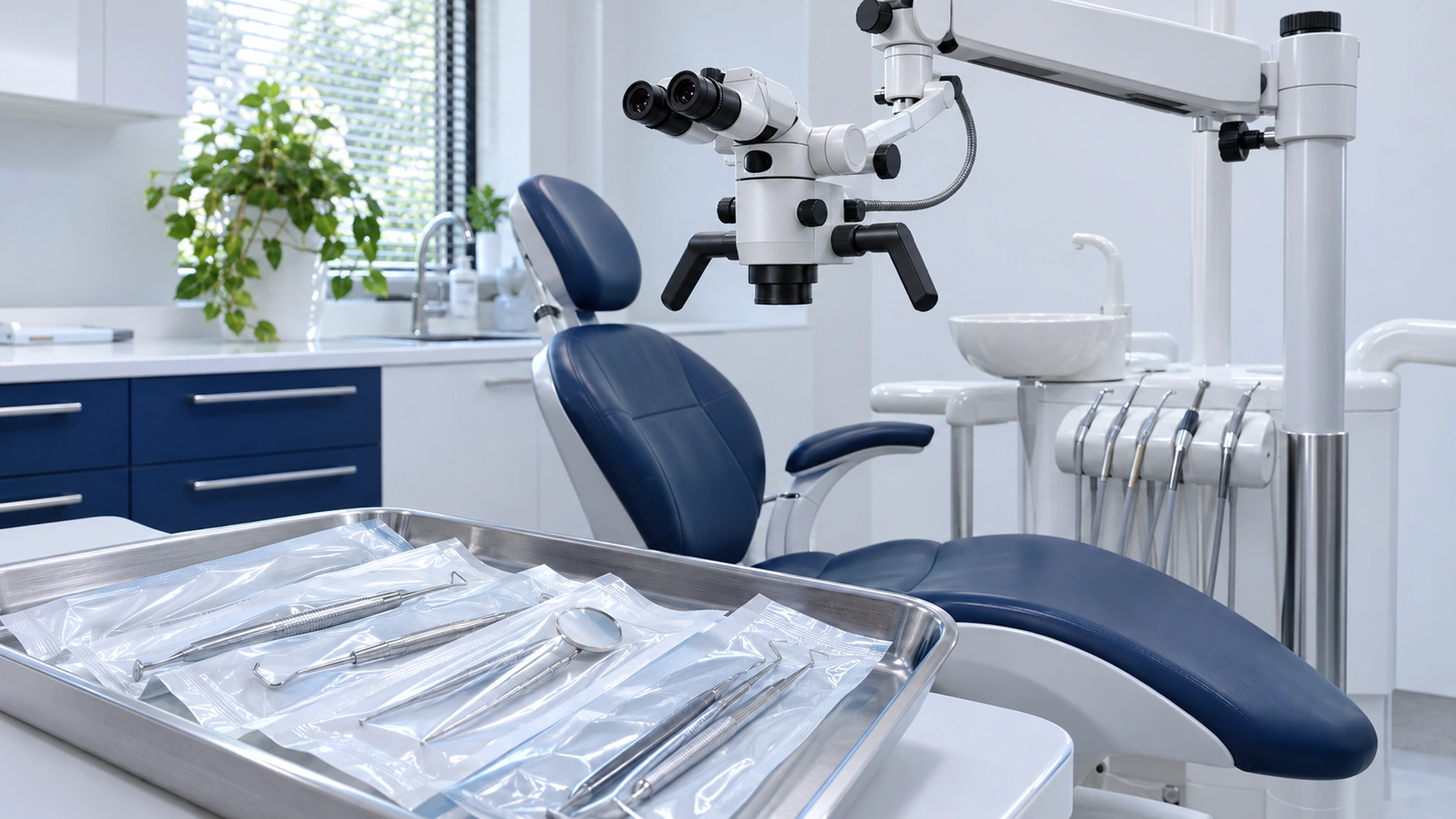
One factor is missing from the table because it should never vary: quality. An operating microscope, a dental dam and rigorous sterilization are not extras; they are the foundation of a well-done root canal. We explain why in our article “What Should a Root Canal Specialist’s Office Have?”
3. What a complete quote should include
Comparing two prices only makes sense if both include the same things. Before deciding, ask for a written quote and check that it specifies:
- The tooth and the exact procedure. For example, “root canal treatment on tooth 4.6” or “retreatment on tooth 2.1.”
- The X-rays: diagnostic, during treatment and final.
- Anesthesia, dental dam isolation and the expected number of visits.
- The final restoration: whether it is included, who will place it and what type is recommended.
- Follow-up visits to confirm that the bone around the root has healed.
4. The cost of not saving the tooth
Many patients wonder whether it would be cheaper to simply pull the tooth. In the short term, extraction is the least expensive procedure. In the long term, it rarely is. This table compares the options in general terms:
| Option | What it involves | Long-term cost |
|---|---|---|
| Keep the tooth (root canal + restoration) | Preserves the natural root, bone and gum. Usually completed within a few weeks. | Generally the lowest: a well-treated, well-restored tooth can last a lifetime. |
| Extract and place an implant | Surgery, months of healing and a crown on the implant. | Generally higher, with more visits and more total time. |
| Extract and place a bridge | Neighboring teeth are reshaped to support the replacement. | Moderate to high; compromises healthy teeth. |
| Extract and leave the gap | Neighboring teeth drift and the bone shrinks over time. | Low at first, but can lead to costly bite problems later. |
The American Association of Endodontists (AAE) notes that saving the natural tooth with root canal treatment is usually less costly than extracting and replacing it. That said, not every tooth can or should be saved: when a fracture or extensive loss of structure makes it unviable, the honest thing to do is say so and refer to an implant specialist.
5. Traveling to Costa Rica for a root canal
Many international patients, especially from the United States and Canada, combine dental care with a trip to Costa Rica, where specialist fees are typically considerably lower than at home. If you are considering it, keep in mind:
- Plan the restoration too. Decide in advance whether the crown will be placed in Costa Rica or by your dentist at home, and schedule enough days for both.
- Send your X-rays beforehand. A recent X-ray lets us estimate complexity and give you a more accurate quote before you travel.
- Ask for a full clinical report. Your dentist at home should receive the X-rays and treatment details for follow-up. We cover this in “Why Every Treatment at Our Clinic Must Be Followed Up.”
6. How we do it at DensCare
7. Frequently asked questions
How much does a root canal cost in Costa Rica?
It depends on the tooth, on whether it is a first treatment or a retreatment, and on its complexity. Molars and retreatments cost the most. The exact price is set after an evaluation with an X-ray.
Is a root canal cheaper in Costa Rica than in the U.S.?
Specialist fees are typically considerably lower than in the United States, while a specialist working with an operating microscope follows the same international standards.
Is the crown included in the root canal price?
Usually not. The final restoration is a separate procedure and is quoted separately. Always ask what the quote includes.
Is it cheaper to pull the tooth?
Only in the short term. Replacing the tooth with an implant or a bridge usually costs more than saving it, and leaving the gap can cause bite problems.
Why does a retreatment cost more?
The old filling material, sometimes posts or broken instruments, must be removed and canals that were already altered must be disinfected again. It takes more time and precision.
I’m in severe pain. Can I be seen today and decide later?
Yes. At an emergency visit the pain is relieved by opening and medicating the tooth. Then, with a complete diagnosis and a written quote, you decide how to continue treatment.
Should I wait until I’m back home to get the crown?
It depends on how soon you can see your dentist. A treated tooth without its final restoration can fracture, so the crown should be placed within a few weeks, either here or at home.
How many visits will I need?
Many root canals are completed in one visit. With an active infection, a second visit may be needed after placing medication inside the tooth.
The price of a root canal should not be measured only by what it costs today, but by how many years it keeps your tooth. An honest diagnosis, a clear quote and a treatment done right the first time are the most affordable way to care for your smile. If you are looking for a root canal specialist in Escazú, Costa Rica, and want to know what your case would cost, we would be glad to evaluate it.
Book your evaluation: +506 2208-8203 · Torre Médica 2, 2nd Floor, Office 203, Hospital CIMA Escazú