1. A viral video, a very old fear
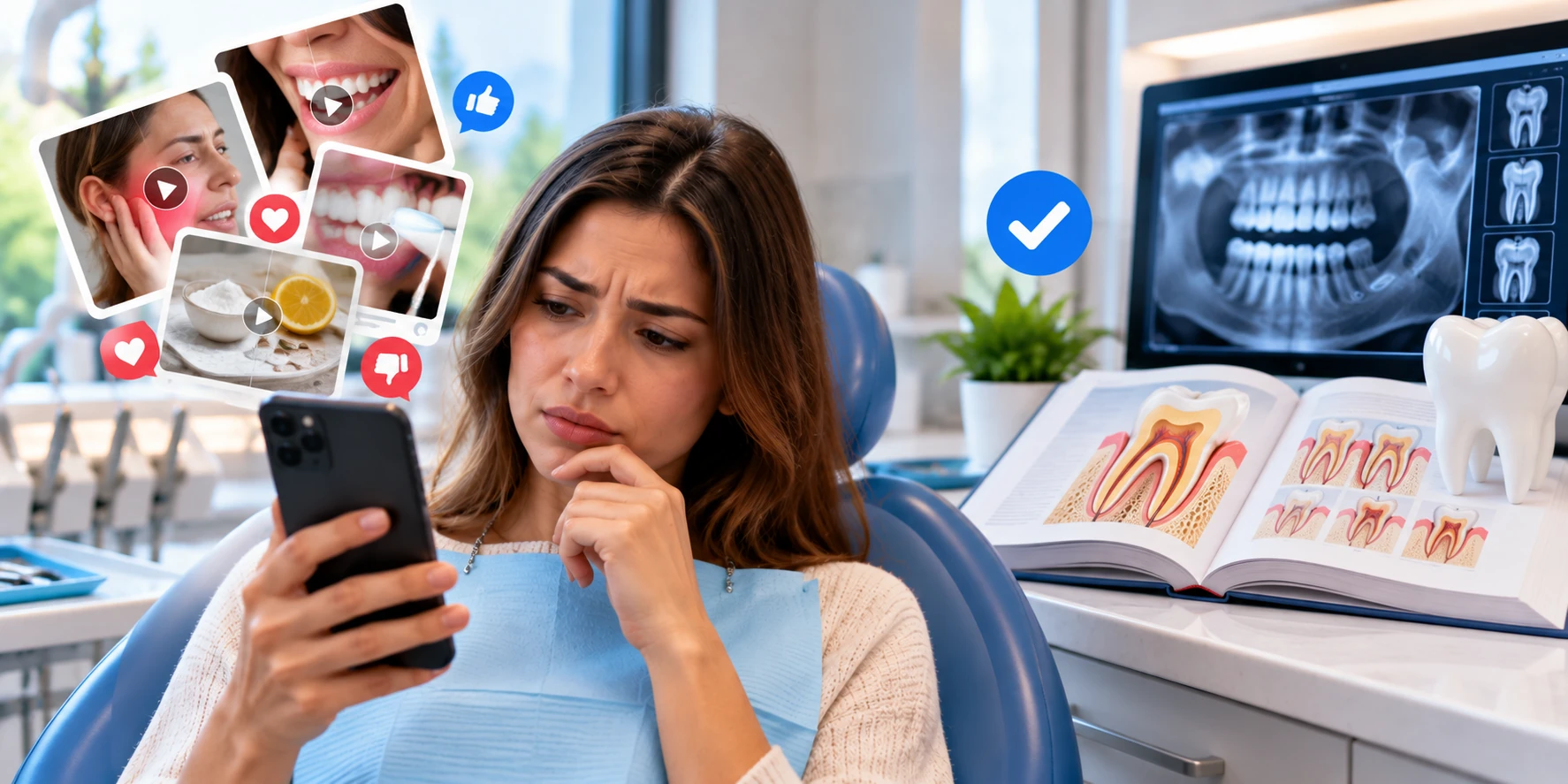
Over the past months, we’ve heard the same question more and more often from patients in our root canal specialist practice in Escazú: “Doctor, I saw a video on social media claiming that root canal treatment leaves bacteria trapped forever, and that this can cause fatigue, brain fog, or even autoimmune disease. Is that true?” The short answer is no. But the question deserves a complete answer, because the fear behind that video didn’t start yesterday — it has more than a hundred years of history, and understanding it is the best way to stop being afraid of it.
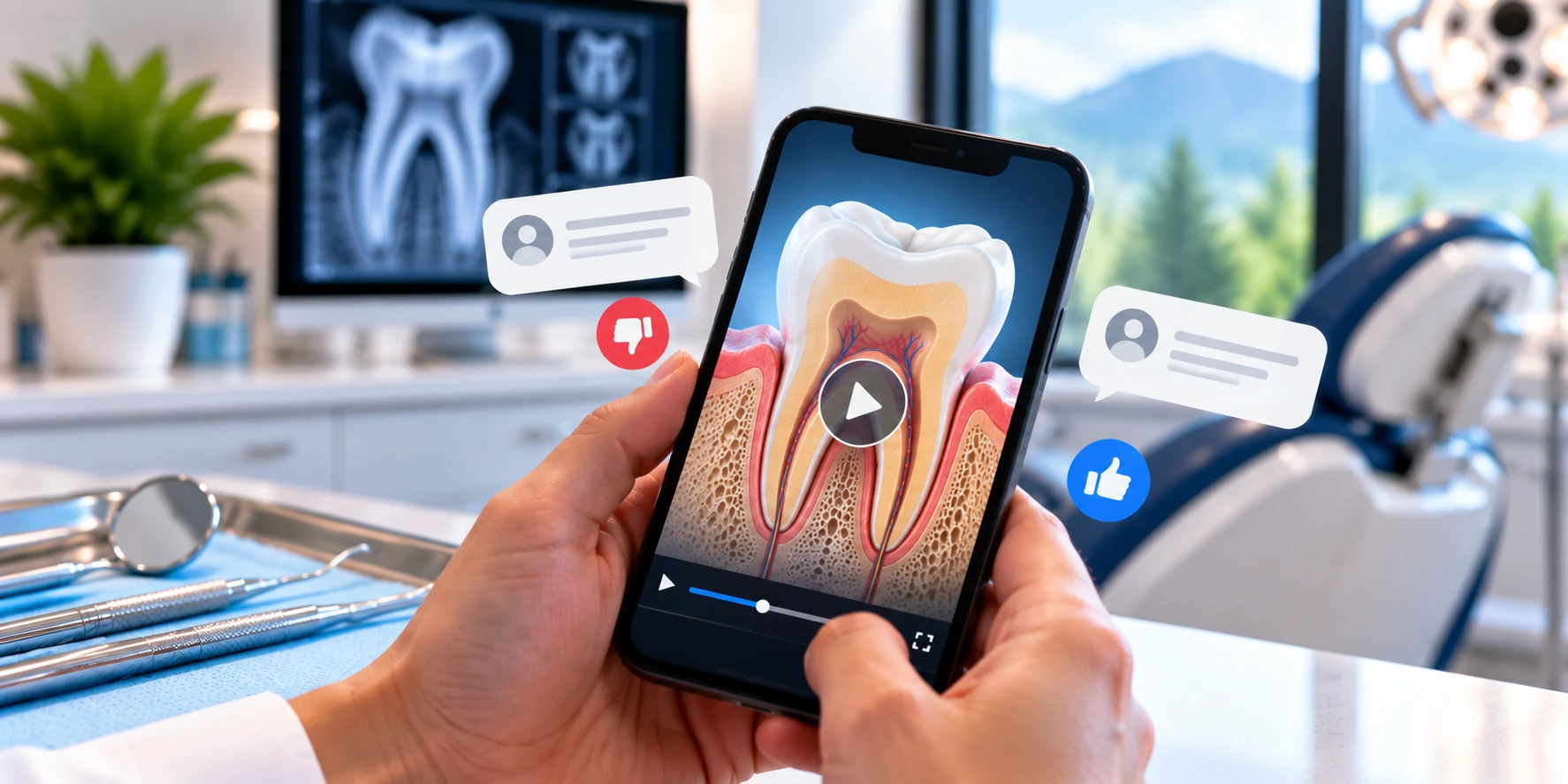
This type of content usually follows a very convincing format: a professional in a lab coat or branded t-shirt, emotional patient testimonials, close-up images of bacteria, and bold claims like “bacteria stay immune inside your tooth for 10 years” or “you start feeling fatigue and brain fog.” It’s a format built to go viral, not to inform with evidence. As specialists, we feel a responsibility to explain, with data and without alarmism, why this narrative doesn’t hold up scientifically.
2. Where the myth comes from: the focal infection theory
The idea that a treated tooth can “make the rest of the body sick” isn’t new. It comes from what’s known as the focal infection theory, proposed in the early 1900s by dentist Weston A. Price, who suggested that root-canal-treated teeth harbored bacteria capable of traveling through the body and causing systemic disease. At the time, this theory led to thousands of healthy, treatable teeth being needlessly extracted.
The problem is that Price’s research lacked control groups and rigorous scientific methodology. As early as 1951, the American Dental Association commissioned a thorough review of his studies and found no evidence supporting the theory. Later researchers, such as Louis Grossman in 1959, formally refuted it. Since then, generations of controlled studies have confirmed that a well-performed root canal treatment is not a source of systemic infection. Even so, the idea never fully disappeared: it resurfaces periodically in documentaries and “alternative dentistry” content, and today it finds in social media the perfect vehicle to travel faster than ever.
3. What the science actually says
It’s true that tooth roots contain a network of microscopic dentinal tubules — sometimes loosely referred to as “micro-canals” — in addition to the main root canal. This is real anatomy, not an invention. What misinformation does is take that accurate fact and stretch it into a conclusion it doesn’t support: that these tubules harbor “active,” “immune” bacteria for years, capable of making the whole body sick. Modern endodontics exists precisely to manage that anatomical complexity safely and predictably.
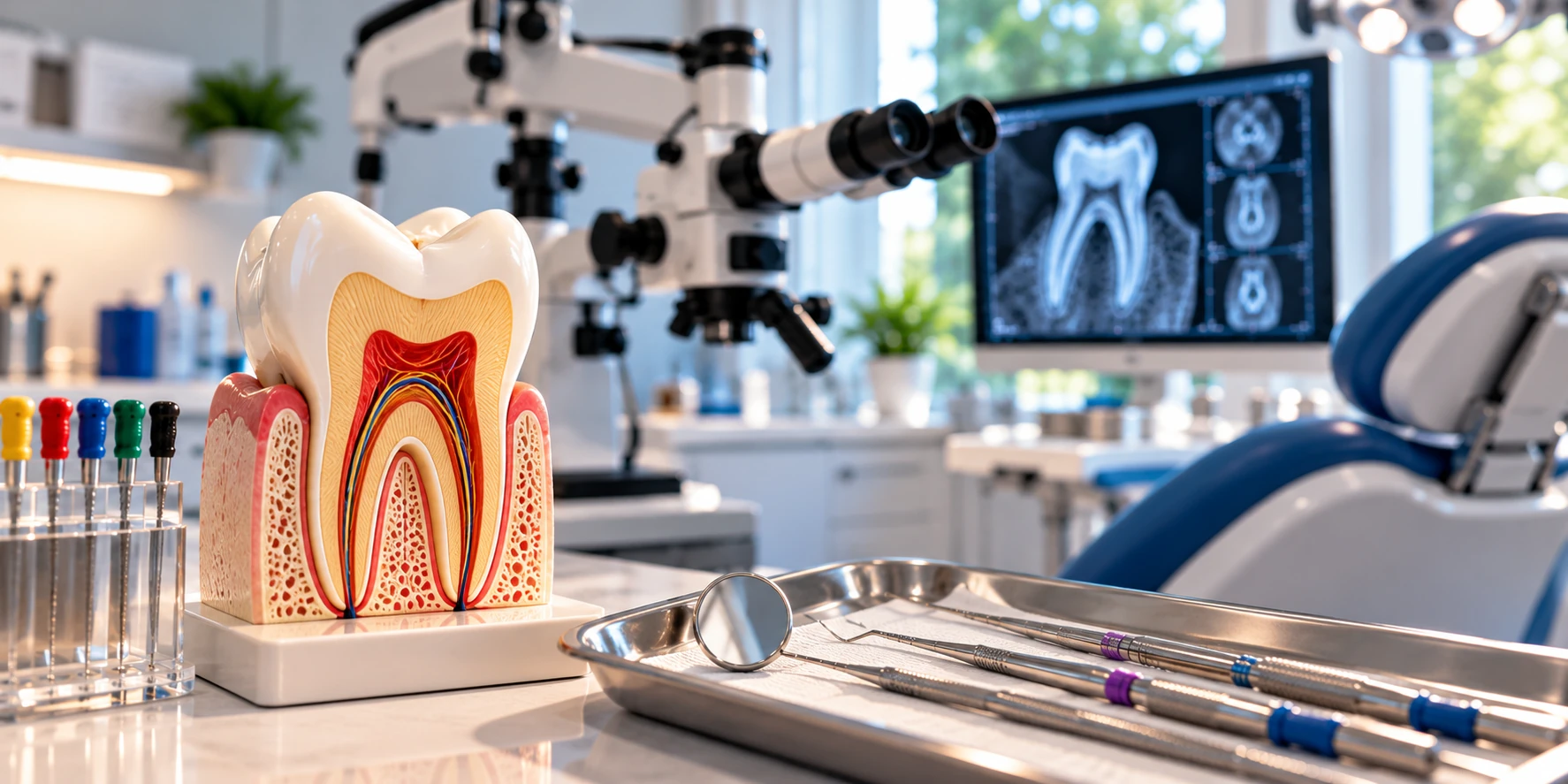
In a practice that works under a dental operating microscope, as is the case at DensCare, disinfection of the root canal system is carried out using scientifically validated irrigation protocols (sodium hypochlorite and EDTA, among others), combined with precise three-dimensional shaping of the canal and a tight hermetic seal. These protocols reduce the bacterial load to clinically insignificant levels and seal the system against reinfection. Documented long-term success rates for properly performed root canal treatment range between 85% and 95% — figures far removed from the idea of a “permanent septic focus.
| The Myth (what’s circulating online) | The Scientific Evidence |
|---|---|
| Bacteria stay “trapped” and “immune” for up to 10 years. | Irrigation and microscope-guided canal shaping reduce bacterial load to clinically insignificant levels; there is no evidence of “immune” bacteria with sustained pathogenic capacity. |
| The treated tooth causes fatigue, brain fog, or autoimmune disease. | There is no epidemiological evidence linking root canal treatment to systemic disease; the focal infection theory was refuted between 1951 and 1959. |
| The only safe solution is to extract the tooth. | Unnecessary extraction removes a functional, healthy tooth altogether; American Association of Endodontists (AAE) guidelines support tooth preservation as the first option. |
| “Micro-canals” are a secret that traditional dentistry hides. | Dentinal tubules are well-known dental anatomy, taught in every endodontic postgraduate program for decades; this is not hidden information. |
4. Why this kind of content goes viral
Content that triggers fear gets shared more than content that offers reassurance — that’s simply how social media algorithms work. An emotional narrative, paired with a personal testimonial and a simplified explanation, will always travel faster than a peer-reviewed study. On top of that, many of these videos selectively cite real anatomical facts (like dentinal tubules) to lend credibility to conclusions that don’t actually follow from them. So before making a decision about your dental health based on a video, it’s worth asking: who is saying this, what evidence are they citing, and what are they selling by the end of the video?
5. Real warning signs (these are the ones to watch for)
6. Frequently asked questions
Do root canals cause cancer or autoimmune disease?
No. There is no scientific evidence supporting that association. The focal infection theory that originated this idea was refuted more than 60 years ago.
What are dentinal tubules or “micro-canals”?
They are real microscopic structures within dentin, present in every tooth. Their existence is well-known anatomy; it does not mean a properly performed root canal remains infected.
How is complete disinfection of the canal ensured?
Through irrigation with validated antibacterial solutions, instrumentation under a dental operating microscope, and a hermetic three-dimensional seal of the root canal system.
Is root canal treatment painful at DensCare?
No. At DensCare we guarantee a pain-free root canal appointment, with effective anesthesia and careful management of dental anxiety at every step.
Which professional associations support the safety of root canal treatment?
The American Association of Endodontists (AAE), the European Society of Endodontology (ESE), and the Costa Rican Academy of Endodontics, among others, support the evidence that rules out the focal infection theory.
7. Why choosing a specialist with an operating microscope matters more than ever
In the face of misinformation, the best defense remains the same: precise treatment performed by an endodontic specialist under a dental operating microscope. Magnification allows accessory canals, isthmuses, and complex anatomy — the very anatomical detail these videos use as a fear argument — to be identified and disinfected. In the hands of a specialist, that detail becomes a standard of precision, not a risk.
At DensCare, located at Hospital CIMA Escazú, every root canal treatment is performed under a dental operating microscope, with up-to-date disinfection protocols and structured clinical and radiographic follow-up after treatment. If a video has raised questions about a treatment you’ve already had, or if you have a pending referral for root canal treatment, we’re happy to review your case, walk you through every step of the process, and answer your questions with evidence — not fear.
8. Conclusion
Concern for your health is legitimate, and it’s healthy to question and seek information. But information should be evaluated by its evidence, not by how many times it’s been shared. A century of dental research supports root canal treatment as a safe and highly successful procedure for preserving natural teeth. If you have questions about a treatment you’ve received or one that’s been recommended to you, the best source remains a direct conversation with your endodontic specialist.
Dr. Samir Tiapa
Escazú, September 10, 2026
Endodontics & Periapical Microsurgery Specialist
Cód. 572617 | Costa Rican Academy of Endodontics
DensCare — Torre Médica 2, Piso 2, Of. 203, Hospital CIMA Escazú
DensCare — Dr. Samir Tiapa | Endodontics & Periapical Microsurgery Specialist | Cód. 572617
Costa Rican Academy of Endodontics · Torre Médica 2, Piso 2, Of. 203, Hospital CIMA Escazú
Tel: 2208-8203 · Emergencies: 7140-0509 · samirtiapa@samirtiapadenscare.com