1. Why it matters where your treatment is done
A root canal means cleaning, disinfecting and sealing canals that measure fractions of a millimeter, inside a root that cannot be seen with the naked eye. The outcome depends on the clinician’s skill, but also on the environment they work in. A specialist with inadequate equipment is practically working blind; a well-equipped office without rigorous sterilization protocols puts the patient at risk.
Most patients choose based on location, price or a recommendation, and almost no one asks how the office is equipped. Yet those very conditions are what separate a treatment that lasts a lifetime from one that will need to be redone. In this article we share the same checklist we apply at DensCare, in Hospital CIMA Escazú, Costa Rica, so you know what to look for and what to ask.
2. Technology: see, measure, isolate and disinfect
Modern endodontics relies on equipment that makes precise work possible inside a tiny space. This table summarizes the essentials and why each one matters to you as a patient.
| Equipment | What it does | Why it matters |
|---|---|---|
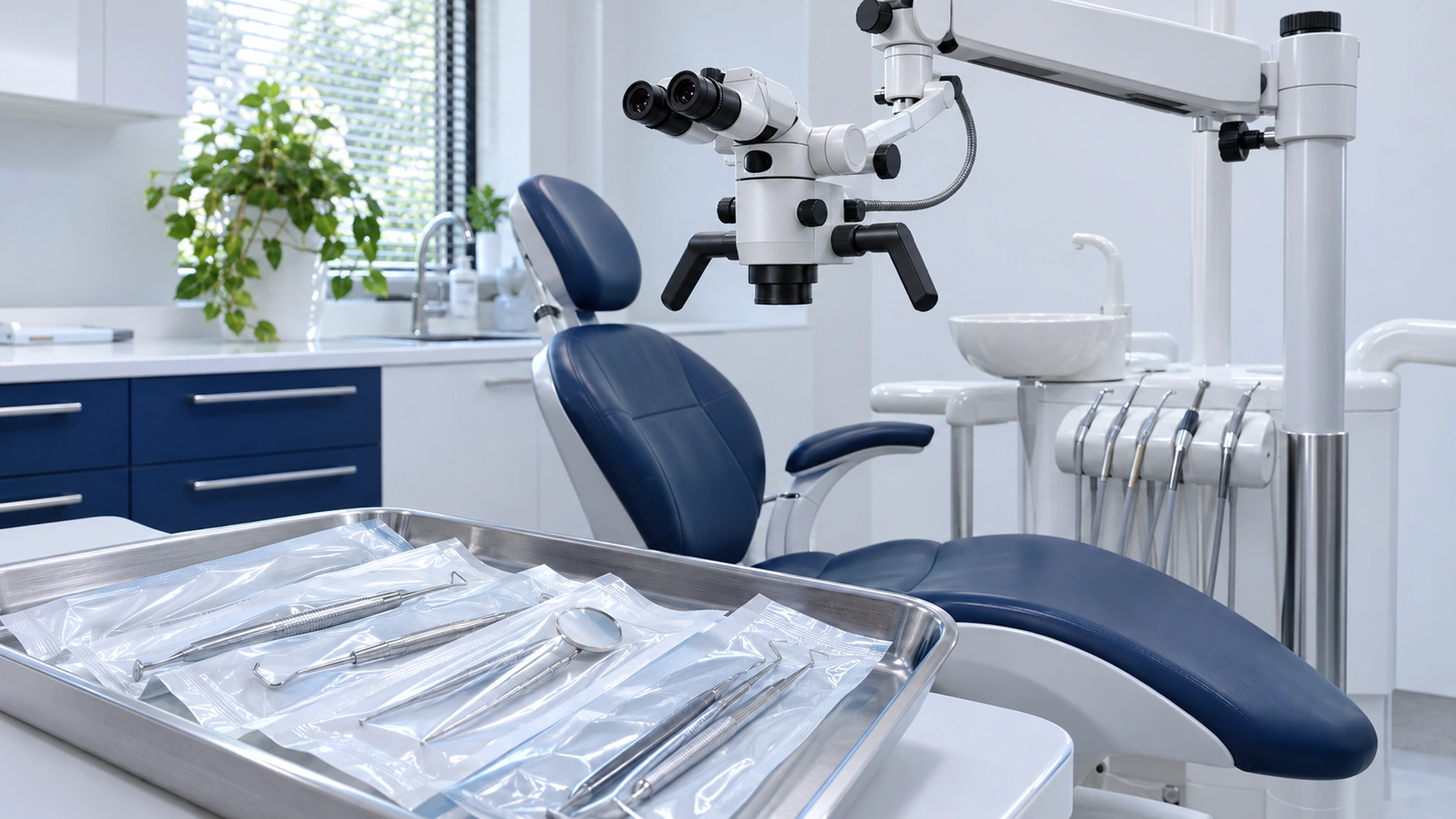
| Operating microscope | Magnifies the inside of the tooth up to about 25 times, with direct, coaxial light. | Reveals extra canals, cracks and calcifications that go unnoticed to the naked eye. |
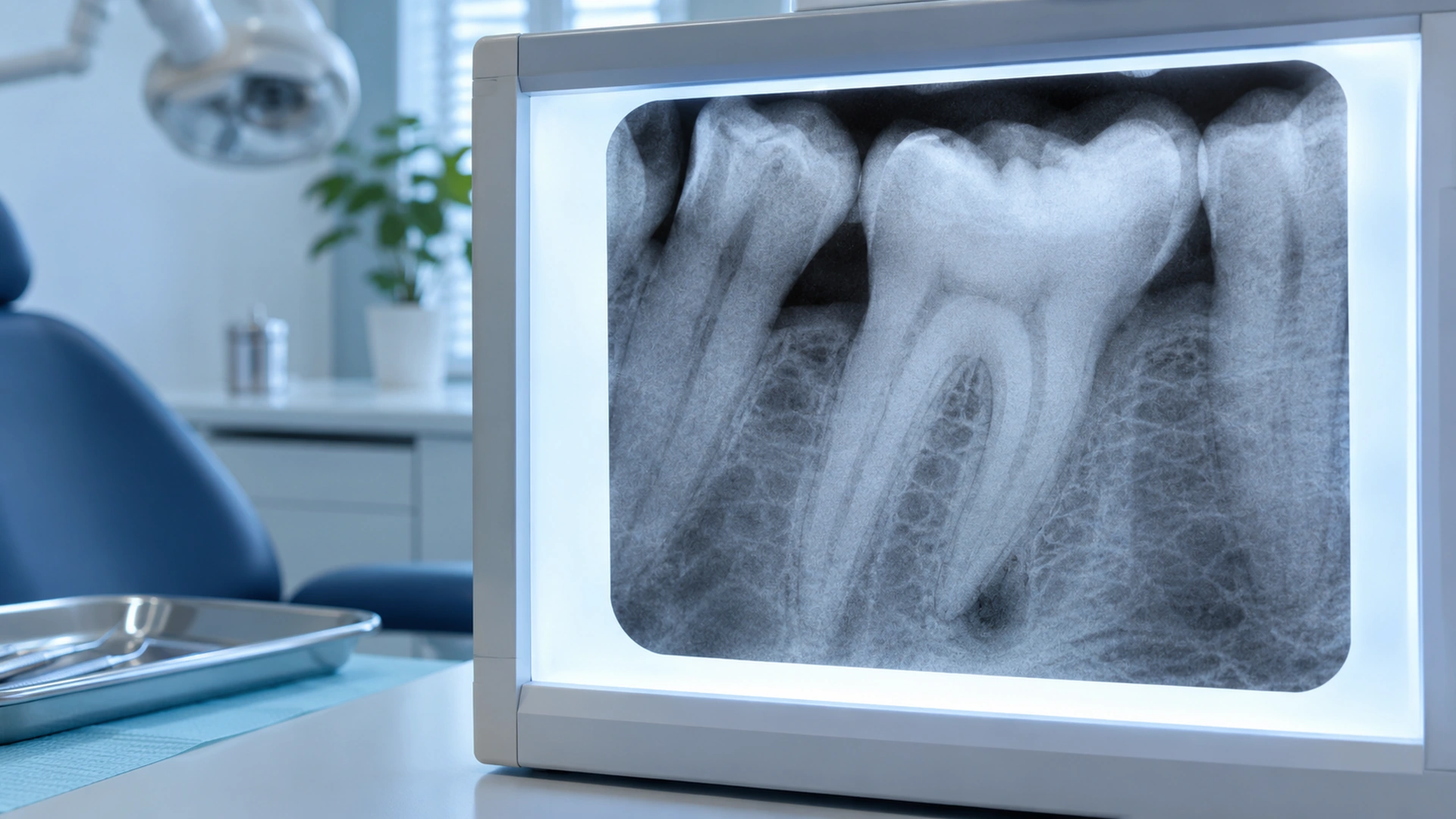
| Digital X-rays | Instant images with a fraction of the radiation of conventional film. | Control at every stage: diagnosis, measurement and final seal. |
| 3D imaging (CBCT) | A three-dimensional image of the tooth and surrounding bone. | Indicated in complex cases: unusual anatomy, resorption, suspected fracture or retreatment. |
| Electronic apex locator | Measures the exact canal length using an electrical signal. | Prevents stopping short of, or going past, the root tip. |
| Dental dam | A sheet that isolates the tooth from saliva throughout the procedure. | Keeps mouth bacteria out of the canals and protects the airway. |
| Nickel-titanium instruments | Flexible files driven by precisely controlled motors. | Follow the root’s natural curvature and reduce the risk of instrument fracture. |
| Ultrasonic irrigant activation | Agitates the disinfecting solutions inside the canal. | Carries disinfection into isthmuses and areas the file cannot reach. |
| Warm obturation and bioceramics | Fill the canal system in three dimensions. | A tight seal reduces the risk of reinfection. |
Of all these, the operating microscope is the one that has changed the specialty most: what you cannot see, you cannot treat. We explain why in detail in our article “No Root Canal Should Ever Be Done Without an Operating Microscope.” The dental dam, for its part, is not optional: the American Association of Endodontists (AAE) considers it the standard of care for every root canal.
3. The team: technology doesn’t work on its own
- An endodontic specialist. After dental school, an endodontist completes a residency or postgraduate program devoted exclusively to diagnosing and treating the pulp and root. In Costa Rica, they must be registered with the national College of Dental Surgeons, and ideally keep up with continuing education through scientific societies such as the Academia Costarricense de Endodoncia.
- A trained dental assistant. Endodontics is “four-handed” dentistry: while the specialist works under the microscope, the assistant handles suction and irrigation, passes instruments and looks after the patient’s comfort. The assistant is also responsible for much of the sterilization protocol, so their training matters as much as the specialist’s.
- An interdisciplinary team. A treated tooth then needs a proper restoration, and some cases call for a periodontal or implant evaluation. Having specialists who work in coordination keeps the patient from being left “halfway there.”
- Communication and follow-up. Written instructions, an emergency contact line, a clinical report for the referring dentist and scheduled check-ups. Care doesn’t end when the patient leaves the chair.
4. The sterilization center: unseen, but it shows
Sterilization is the part of the office patients almost never see, and one of the most important. A well-designed sterilization center follows a one-way path, from the dirty zone to the clean zone, so that sterilized instruments never cross paths with contaminated ones. These are its essential conditions, in line with the infection-control guidelines of the U.S. Centers for Disease Control and Prevention (CDC):
- Pre-cleaning. Before sterilization, instruments are cleaned in an ultrasonic cleaner or thermal washer-disinfector. A dirty instrument does not sterilize properly, even after going through the autoclave.
- Sealed packaging. Each set is packed in sealed, dated pouches with a chemical indicator that changes color when the cycle was successful. You should see them opened in front of you.
- Class B autoclave. It uses fractionated vacuum so steam penetrates hollow and wrapped instruments, such as handpieces. It is the most demanding standard for dentistry.
- Biological monitoring. At least once a week, a spore test is run to confirm the autoclave truly sterilizes, and the results are logged.
- Single-use materials. Needles, suction tips, bibs and protective barriers are discarded after each patient, and chair surfaces are disinfected between appointments.
5. Facilities and patient safety
Beyond clinical equipment, the setting matters. An endodontic office must hold a sanitary operating permit from Costa Rica’s Ministry of Health, keep complete clinical records and obtain informed consent before every procedure. Working within a hospital environment adds an extra layer of safety: immediate access to emergency services, imaging and laboratory support if a case requires it.
Comfort is part of quality too. A calm environment, enough time for each appointment and proper anesthesia techniques make it possible for treatment to be completely pain-free, something that today should be the norm, not the exception.
6. The minimum vs. the optimal
This comparison sums up the difference between an office that can perform a root canal and one prepared to do it to the highest standard.
| Basic office | Specialized endodontic office |
|---|---|
| Naked eye or loupes | Operating microscope in every treatment |
| Conventional X-rays only | Digital X-rays and access to 3D imaging |
| Length estimated from X-rays alone | Electronic apex locator plus X-ray confirmation |
| Isolation with cotton rolls | Dental dam in every case |
| Syringe irrigation only | Irrigation with ultrasonic activation |
| Sterilization without records | Class B autoclave with documented biological monitoring |
| No follow-up | Scheduled clinical and X-ray follow-up |
7. How we apply it at DensCare
8. Frequently asked questions
Can any dentist do a root canal?
Legally, yes, but molars, curved or calcified canals, retreatments and persistent pain benefit from an endodontic specialist working with an operating microscope.
What is a dental dam and why does it matter?
It is a sheet that isolates the tooth from saliva. It keeps bacteria out of the canals during treatment and prevents the patient from swallowing instruments or solutions. It is the standard of care.
How do I know the instruments are sterile?
They should come in sealed pouches with an indicator that has changed color, and be opened in front of you. Feel free to ask: a good office is happy to answer.
Do I always need a 3D scan?
No. Digital X-rays are enough in most cases. 3D imaging is reserved for complex anatomy, resorption, suspected fracture or retreatment.
Are dental X-rays safe?
Yes. Digital X-rays use a very low dose, and only the images needed to diagnose and monitor treatment are taken.
What should I ask before booking?
Whether the clinician is an endodontic specialist, whether they work with a microscope and dental dam, how they sterilize instruments and what follow-up they offer after treatment.
Choosing where to have a root canal is a decision that determines how long that tooth will last. A specialist, the right technology and rigorous sterilization are not luxuries: they are the minimum conditions to get it right the first time. If you are looking for a root canal specialist in Escazú, Costa Rica, who works with an operating microscope, or a second opinion on your case, we would be glad to see you.
Book your visit: +506 2208-8203 · Torre Médica 2, 2nd Floor, Office 203, Hospital CIMA Escazú